
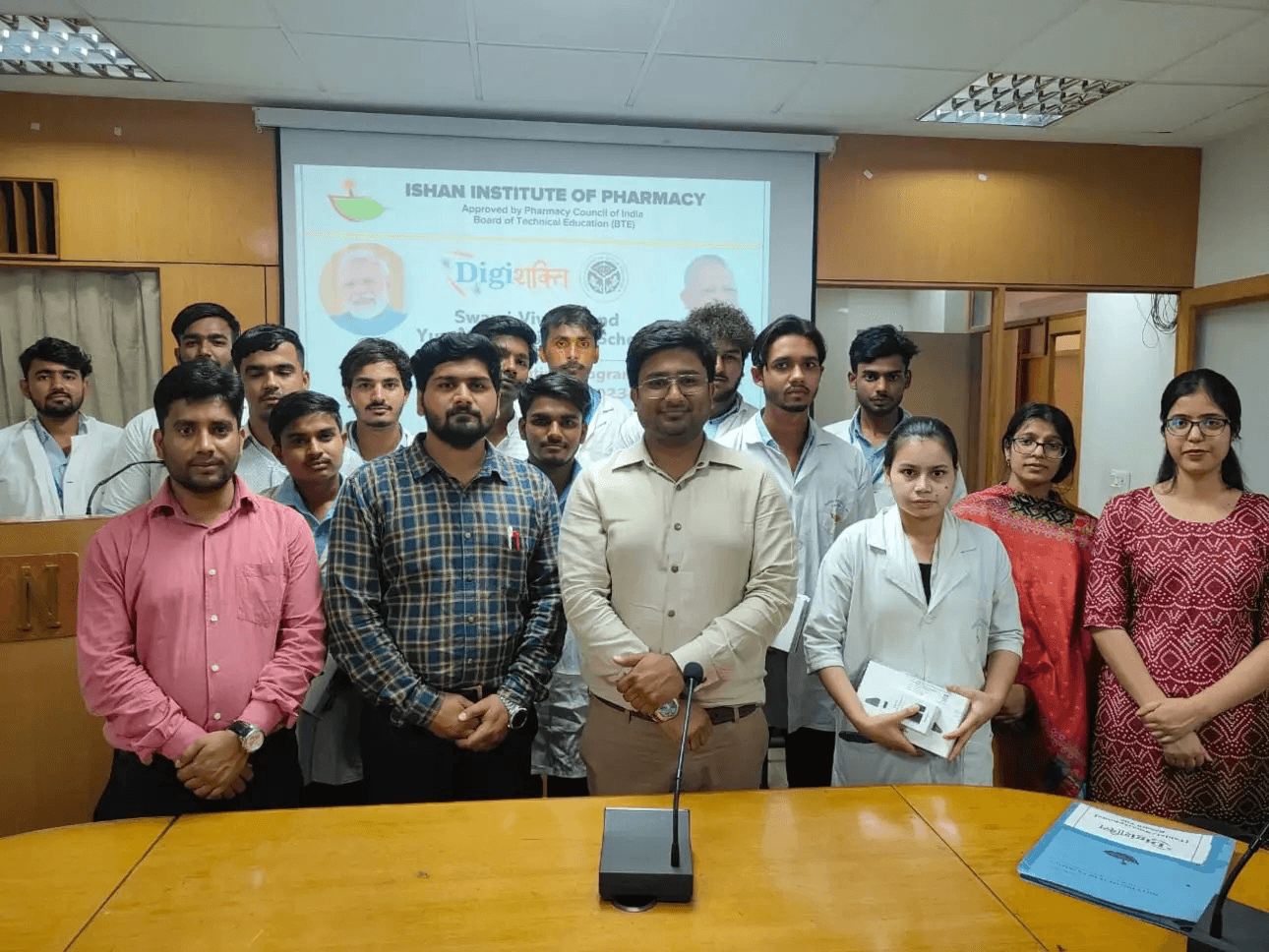
Ishan Institute of Pharmacy
D Pharm syllabus at Ishan Institute of Pharmacy

D Pharm Syllabus

Year-wise syllabus of the Diploma in Pharmacy (D Pharm) programme — course codes, topics, practicals and recommended books for every paper.

Duration
2 Years · Part I & Part II
Papers
21 Courses · 500 Hrs Practical Training
Affiliation
PCI Approved
Syllabus
PCI Education Regulations 2020 (ER-2020)

About the D Pharm Syllabus

Ishan Institute of Pharmacy follows the Diploma in Pharmacy syllabus framed by the Pharmacy Council of India under the Education Regulations 2020 (ER-2020), notified in the Gazette of India in October 2020. The course is year-wise: Part I covers Pharmaceutics, Pharmaceutical Chemistry, Pharmacognosy, Human Anatomy & Physiology and Social Pharmacy, and Part II covers Pharmacology, Community Pharmacy & Management, Biochemistry & Clinical Pathology, Pharmacotherapeutics, Hospital & Clinical Pharmacy and Pharmacy Law & Ethics.

Across the programme there are 11 theory courses and 10 practical courses, with 825 theory hours, 600 practical hours and 275 tutorial hours, and 500 hours of practical training in Part III. Students do not earn credits under ER-2020, though the curriculum is deemed equivalent to 80 credits for administrative purposes.

Each course defines its scope, objectives and outcomes, and students submit assignment and field visit reports through the year. Theory and practical courses are each examined for 80 marks in the final Board or University examination, with 20 marks of internal assessment from sessional examinations. Every course below lists its course code, hours, chapter-wise topics, practicals and recommended books from the official PCI syllabus.

D Pharm Subjects List – Year-wise

Year-wise scheme of papers for the D Pharm programme as per Pharmacy Council of India. Where a row offers a choice of papers or groups, students opt as indicated. Select a course code to jump to its detailed syllabus.

Part I

Course CodePaper TitleMarks
ER20-11TPharmaceutics (Theory)20+80
ER20-11PPharmaceutics (Practical)20+80
ER20-12TPharmaceutical Chemistry (Theory)20+80
ER20-12PPharmaceutical Chemistry (Practical)20+80
ER20-13TPharmacognosy (Theory)20+80
ER20-13PPharmacognosy (Practical)20+80
ER20-14THuman Anatomy & Physiology (Theory)20+80
ER20-14PHuman Anatomy & Physiology (Practical)20+80
ER20-15TSocial Pharmacy (Theory)20+80
ER20-15PSocial Pharmacy (Practical)20+80

Part II

Course CodePaper TitleMarks
ER20-21TPharmacology (Theory)20+80
ER20-21PPharmacology (Practical)20+80
ER20-22TCommunity Pharmacy & Management (Theory)20+80
ER20-22PCommunity Pharmacy & Management (Practical)20+80
ER20-23TBiochemistry & Clinical Pathology (Theory)20+80
ER20-23PBiochemistry & Clinical Pathology (Practical)20+80
ER20-24TPharmacotherapeutics (Theory)20+80
ER20-24PPharmacotherapeutics (Practical)20+80
ER20-25THospital & Clinical Pharmacy (Theory)20+80
ER20-25PHospital & Clinical Pharmacy (Practical)20+80
ER20-26TPharmacy Law & Ethics (Theory)20+80

D Pharm Part I Syllabus

Part I of the D Pharm covers Pharmaceutics, Pharmaceutics, Pharmaceutical Chemistry, Pharmaceutical Chemistry, Pharmacognosy, Pharmacognosy, Human Anatomy & Physiology, Human Anatomy & Physiology, Social Pharmacy, Social Pharmacy.

ER20-11TTheoryMarks: 20+8075 Hours (3 Hours/week) + 25 Tutorial Hours

Pharmaceutics

Course Objectives

  • Scope: This course is designed to impart basic knowledge and skills on the art and science of formulating and dispensing different pharmaceutical dosage forms.
  • Basic concepts, types and need
  • Advantages and disadvantages, methods of preparation / formulation
  • Packaging and labelling requirements
  • Basic quality control tests, concepts of quality assurance and good manufacturing practices

Course Content

  1. Chapter 1

    7 Hours

    History of the profession of Pharmacy in India in relation to Pharmacy education, industry, pharmacy practice, and various professional associations.

    Pharmacy as a career

    Pharmacopoeia: Introduction to IP, BP, USP, NF and Extra Pharmacopoeia. Salient features of Indian Pharmacopoeia

  2. Chapter 2

    5 Hours

    Packaging materials: Types, selection criteria, advantages and disadvantages of glass, plastic, metal, rubber as packaging materials

  3. Chapter 3

    3 Hours

    Pharmaceutical aids: Organoleptic (Colouring, flavouring, and sweetening) agents

    Preservatives: Definition, types with examples and uses

  4. Chapter 4

    9 Hours

    Unit operations: Definition, objectives/applications, principles, construction, and workings of:

    Size reduction: hammer mill and ball mill

    Size separation: Classification of powders according to IP, Cyclone separator, Sieves and standards of sieves

    Mixing: Double cone blender, Turbine mixer, Triple roller mill and Silverson mixer homogenizer

    Filtration: Theory of filtration, membrane filter and sintered glass filter

    Drying: working of fluidized bed dryer and process of freeze drying

    Extraction: Definition, Classification, method, and applications

  5. Chapter 5

    41 Hours

    Tablets – coated and uncoated, various modified tablets (sustained release, extended-release, fast dissolving, multi-layered, etc.)

    Capsules - hard and soft gelatine capsules

    Liquid oral preparations - solution, syrup, elixir, emulsion, suspension, dry powder for reconstitution

    Topical preparations - ointments, creams, pastes, gels, liniments and lotions, suppositories, and pessaries

    Nasal preparations, Ear preparations

    Powders and granules - Insufflations, dusting powders, effervescent powders, and effervescent granules

    Sterile formulations – Injectables, eye drops and eye ointments

    Immunological products: Sera, vaccines, toxoids, and their manufacturing methods.

  6. Chapter 6

    5 Hours

    Basic structure, layout, sections, and activities of pharmaceutical manufacturing plants

    Quality control and quality assurance: Definition and concepts of quality control and quality assurance, current good manufacturing practice (cGMP), Introduction to the concept of calibration and validation

  7. Chapter 7

    5 Hours

    Novel drug delivery systems: Introduction, Classification with examples, advantages, and challenges

Suggested Readings

  • History of Pharmacy in India by Dr. Harikishan Singh
  • Indian Pharmacopoeia, Govt. of India Publication
  • A Text book of Pharmaceuticals Formulation by B.M. Mithal, Vallabh Prakashan.
  • Bentleys’ Text book of Pharmaceutics, Editor E.A. Rawlins, Elsevier Int.,
  • The Theory and Practice of Industrial Pharmacy. Leon Lachman, Herbert Lieberman and Joseph Kanig, Editors, Lea and Febiger, Philadelphia. Varghese Publishing House
  • Responsible Use of Medicines: A Layman’s Handbook, www.ipapharma.org / publications
ER20-11PPracticalMarks: 20+8075 Hours (3 Hours/week)

Pharmaceutics

Course Objectives

  • Scope: This course is designed to train the students in formulating and dispensing common pharmaceutical dosage forms.
  • Calculation of working formula from the official master formula
  • Formulation of dosage forms based on working formula
  • Appropriate Packaging and labelling requirements
  • Methods of basic quality control tests

Practical / Lab Exercises

  1. Handling and referring the official references: Pharmacopoeias, Formularies, etc. for retrieving formulas, procedures, etc.
  2. Formulation of the following dosage forms as per monograph standards and dispensing with appropriate packaging and labelling: Liquid Oral: Simple syrup, Piperazine citrate elixir, Aqueous Iodine solution; Emulsion: Castor oil emulsion, Cod liver oil emulsion; Suspension: Calamine lotion, Magnesium hydroxide mixture; Ointment: Simple ointment base, Sulphur ointment; Cream: Cetrimide cream; Gel: Sodium alginate gel; Liniment: Turpentine liniment, White liniment BPC; Dry powder: Effervescent powder granules, Dusting powder; Sterile Injection: Normal Saline, Calcium gluconate Injection; Hard Gelatine Capsule: Tetracycline capsules; Tablet: Paracetamol tablets
  3. Formulation of at least five commonly used cosmetic preparations – e.g. cold cream, shampoo, lotion, toothpaste etc
  4. Demonstration on various stages of tablet manufacturing processes
  5. Appropriate methods of usage and storage of all dosage forms including special dosage such as different types of inhalers, spacers, insulin pens
  6. Demonstration of quality control tests and evaluation of common dosage forms viz. tablets, capsules, emulsion, sterile injections as per the monographs
  7. Assignment: Various systems of measures commonly used in prescribing, compounding and dispensing practices
  8. Assignment: Market preparations (including Fixed Dose Combinations) of each type of dosage forms, their generic name, minimum three brand names and label contents of the dosage forms mentioned in theory/practical
  9. Assignment: Overview of various machines / equipments / instruments involved in the formulation and quality control of various dosage forms / pharmaceutical formulations.
  10. Assignment: Overview of extemporaneous preparations at community / hospital pharmacy vs. manufacturing of dosage forms at industrial level
  11. Assignment: Basic pharmaceutical calculations: ratios, conversion to percentage fraction, alligation, proof spirit, isotonicity
  12. Field visit: The students shall be taken for an industrial visit to pharmaceutical industries to witness and understand the various processes of manufacturing of any of the common dosage forms viz. tablets, capsules, liquid orals, injectables, etc. Individual reports from each student on their learning experience from the field visit shall be submitted.
ER20-12TTheoryMarks: 20+8075 Hours (3 Hours/week) + 25 Tutorial Hours

Pharmaceutical Chemistry

Course Objectives

  • Scope: This course is designed to impart basic knowledge on the chemical structure, storage conditions and medicinal uses of organic and inorganic chemical substances used as drugs and pharmaceuticals. Also, this course discusses the impurities, quality control aspects of chemical substances used in pharmaceuticals.
  • Chemical classification, chemical name, chemical structure
  • Pharmacological uses, doses, stability and storage conditions
  • Different types of formulations / dosage form available and their brand names
  • Impurity testing and basic quality control tests

Course Content

  1. Chapter 1

    8 Hours

    Introduction to Pharmaceutical chemistry: Scope and objectives

    Sources and types of errors: Accuracy, precision, significant figures

    Impurities in Pharmaceuticals: Source and effect of impurities in Pharmacopoeial substances, importance of limit test, Principle and procedures of Limit tests for chlorides, sulphates, iron, heavy metals and arsenic.

  2. Chapter 2

    8 Hours

    Volumetric analysis: Fundamentals of volumetric analysis, Acid-base titration, non-aqueous titration, precipitation titration, complexometric titration, redox titration

    Gravimetric analysis: Principle and method.

  3. Chapter 3

    7 Hours

    Inorganic Pharmaceuticals: Pharmaceutical formulations, market preparations, storage conditions and uses of

    Haematinics: Ferrous sulphate, Ferrous fumarate, Ferric ammonium citrate, Ferrous ascorbate, Carbonyl iron

    Gastro-intestinal Agents: Antacids: Aluminium hydroxide gel, Magnesium hydroxide, Magaldrate, Sodium bicarbonate, Calcium Carbonate, Acidifying agents, Adsorbents, Protectives, Cathartics

    Topical agents: Silver Nitrate, Ionic Silver, Chlorhexidine Gluconate, Hydrogen peroxide, Boric acid, Bleaching powder, Potassium permanganate

    Dental products: Calcium carbonate, Sodium fluoride, Denture cleaners, Denture adhesives, Mouth washes

    Medicinal gases: Carbon dioxide, nitrous oxide, oxygen

  4. Chapter 4

    2 Hours

    Introduction to nomenclature of organic chemical systems with particular reference to heterocyclic compounds containing up to Three rings

  5. Chapter 5

    9 Hours

    Study of the following category of medicinal compounds with respect to classification, chemical name, chemical structure (compounds marked with*) uses, stability and storage conditions, different types of formulations and their popular brand names

    Drugs Acting on Central Nervous System

    Anaesthetics: Thiopental Sodium*, Ketamine Hydrochloride*, Propofol

    Sedatives and Hypnotics: Diazepam*, Alprazolam*, Nitrazepam, Phenobarbital*

    Antipsychotics: Chlorpromazine Hydrochloride*, Haloperidol*, Risperidone*, Sulpiride*, Olanzapine, Quetiapine, Lurasidone

    Anticonvulsants: Phenytoin*, Carbamazepine*, Clonazepam, Valproic Acid*, Gabapentin*, Topiramate, Vigabatrin, Lamotrigine

    Anti-Depressants: Amitriptyline Hydrochloride*, Imipramine Hydrochloride*, Fluoxetine*, Venlafaxine, Duloxetine, Sertraline, Citalopram, Escitalopram, Fluvoxamine, Paroxetine

  6. Chapter 6

    9 Hours

    Drugs Acting on Autonomic Nervous System

    Sympathomimetic Agents: Direct Acting: Nor-Epinephrine*, Epinephrine, Phenylephrine, Dopamine*, Terbutaline, Salbutamol (Albuterol), Naphazoline*, Tetrahydrozoline. Indirect Acting Agents: Hydroxy Amphetamine, Pseudoephedrine. Agents With Mixed Mechanism: Ephedrine, Metaraminol

    Adrenergic Antagonists: Alpha Adrenergic Blockers: Tolazoline, Phentolamine

    Phenoxybenzamine, Prazosin. Beta Adrenergic Blockers: Propranolol*, Atenolol*, Carvedilol

    Cholinergic Drugs and Related Agents: Direct Acting Agents: Acetylcholine*, Carbachol, And Pilocarpine. Cholinesterase Inhibitors: Neostigmine*, Edrophonium Chloride, Tacrine Hydrochloride, Pralidoxime Chloride, Echothiopate Iodide

    Cholinergic Blocking Agents: Atropine Sulphate*, Ipratropium Bromide

    Synthetic Cholinergic Blocking Agents: Tropicamide, Cyclopentolate Hydrochloride, Clidinium Bromide, Dicyclomine Hydrochloride*

  7. Chapter 7

    5 Hours

    Drugs Acting on Cardiovascular System

    Anti-Arrhythmic Drugs: Quinidine Sulphate, Procainamide Hydrochloride, Verapamil, Phenytoin Sodium*, Lidocaine Hydrochloride, Lorcainide Hydrochloride, Amiodarone and Sotalol

    Anti-Hypertensive Agents: Propranolol*, Captopril*, Ramipril, Methyldopate Hydrochloride, Clonidine Hydrochloride, Hydralazine Hydrochloride, Nifedipine,

    Antianginal Agents: Isosorbide Dinitrate

  8. Chapter 8

    2 Hours

    Diuretics: Acetazolamide, Frusemide*, Bumetanide, Chlorthalidone, Benzthiazide, Metolazone, Xipamide, Spironolactone

  9. Chapter 9

    3 Hours

    Hypoglycemic Agents: Insulin and Its Preparations, Metformin*, Glibenclamide*, Glimepiride, Pioglitazone, Repaglinide, Gliflozins, Gliptins

  10. Chapter 10

    3 Hours

    Analgesic And Anti-Inflammatory Agents: Morphine Analogues, Narcotic Antagonists; Nonsteroidal Anti-Inflammatory Agents (NSAIDs) - Aspirin*, Diclofenac, Ibuprofen*, Piroxicam, Celecoxib, Mefenamic Acid, Paracetamol*, Aceclofenac

  11. Chapter 11

    8 Hours

    Anti-Infective Agents

    Antifungal Agents: Amphotericin-B, Griseofulvin, Miconazole, Ketoconazole*, Itraconazole, Fluconazole*, Naftifine Hydrochloride

    Urinary Tract Anti-Infective Agents: Norfloxacin, Ciprofloxacin, Ofloxacin*, Moxifloxacin,

    Anti-Tubercular Agents: INH*, Ethambutol, Para Amino Salicylic Acid, Pyrazinamide, Rifampicin, Bedaquiline, Delamanid, Pretomanid*

    Antiviral Agents: Amantadine Hydrochloride, Idoxuridine, Acyclovir*, Foscarnet, Zidovudine, Ribavirin, Remdesivir, Favipiravir

    Antimalarials: Quinine Sulphate, Chloroquine Phosphate*, Primaquine Phosphate, Mefloquine*, Cycloguanil, Pyrimethamine, Artemisinin

    Sulfonamides: Sulfanilamide, Sulfadiazine, Sulfamethoxazole, Sulfacetamide*, Mafenide Acetate, Cotrimoxazole, Dapsone*

  12. Chapter 12

    8 Hours

    Antibiotics: Penicillin G, Amoxicillin*, Cloxacillin, Streptomycin, Tetracyclines: Doxycycline, Minocycline, Macrolides: Erythromycin, Azithromycin, Miscellaneous: Chloramphenicol* Clindamycin

  13. Chapter 13

    3 Hours

    Anti-Neoplastic Agents: Cyclophosphamide*, Busulfan, Mercaptopurine, Fluorouracil*, Methotrexate, Dactinomycin, Doxorubicin Hydrochloride, Vinblastine Sulphate, Cisplatin*, Dromostanolone Propionate

Suggested Readings

  • Medicinal & Pharmaceutical chemistry by Harikishan Singh and VK Kapoor
  • Wilson and Griswold’s Text book of Organic Medicinal and pharmaceutical Chemistry
  • Practical Organic Chemistry by Mann and Saunders.
  • Practical Pharmaceutical Chemistry, Volume- I & II by Beckett and J. B. Stenlake
  • Indian Pharmacopoeia
  • Vogel’s text book of Practical Organic Chemistry
ER20-12PPracticalMarks: 20+8075 Hours (3 Hours/week)

Pharmaceutical Chemistry

Course Objectives

  • Scope: This course is designed to impart basic training and hands-on experiences to synthesis chemical substances used as drugs and pharmaceuticals. Also, to perform the quality control tests, impurity testing, test for purity and systematic qualitative analysis of chemical substances used as drugs and pharmaceuticals.
  • Limit tests and assays of selected chemical substances as per the monograph
  • Volumetric analysis of the chemical substances
  • Basics of preparatory chemistry and their analysis
  • Systematic qualitative analysis for the identification of the chemical drugs

Practical / Lab Exercises

  1. Limit test for Chlorides; sulphate; Iron; heavy metals
  2. Identification tests for Anions and Cations as per Indian Pharmacopoeia
  3. Fundamentals of Volumetric analysis: Preparation of standard solution and standardization of Sodium Hydroxide, Potassium Permanganate
  4. Assay of the following compounds: Ferrous sulphate- by redox titration; Calcium gluconate-by complexometric; Sodium chloride-by Modified Volhard's method; Ascorbic acid by iodometry; Ibuprofen by alkalimetry
  5. Fundamentals of preparative organic chemistry: Determination of Melting point and boiling point of organic compounds
  6. Preparation of organic compounds: Benzoic acid from Benzamide; Picric acid from Phenol
  7. Identification and test for purity of pharmaceuticals: Aspirin, Caffeine, Paracetamol, Sulfanilamide
  8. Systematic Qualitative analysis experiments (4 substances)
  9. Assignment: Different monographs and formularies available and their major contents
  10. Assignment: Significance of quality control and quality assurance in pharmaceutical industries
  11. Assignment: Overview on Green Chemistry
  12. Assignment: Various software programs available for computer aided drug discovery
  13. Assignment: Various instrumentations used for characterization and quantification of drug
ER20-13TTheoryMarks: 20+8075 Hours (3 Hours/week) + 25 Tutorial Hours

Pharmacognosy

Course Objectives

  • Scope: This course is designed to impart knowledge on the medicinal uses of various drugs of natural origin. Also, the course emphasizes the fundamental concepts in the evaluation of crude drugs, alternative systems of medicine, nutraceuticals, and herbal cosmetics.
  • Occurrence, distribution, isolation, identification tests of common phytoconstituents
  • Therapeutic activity and pharmaceutical applications of various natural drug substances and phytoconstituents
  • Biological source, chemical constituents of selected crude drugs and their therapeutic efficacy in common diseases and ailments
  • Basic concepts in quality control of crude drugs and various system of medicines
  • Applications of herbs in health foods and cosmetics

Course Content

  1. Chapter 1

    2 Hours

    Definition, history, present status and scope of Pharmacognosy

  2. Chapter 2

    4 Hours

    Classification of drugs:

    Alphabetical

    Taxonomical

    Morphological

    Pharmacological

    Chemical

    Chemo-taxonomical

  3. Chapter 3

    6 Hours

    Quality control of crude drugs:

    Different methods of adulteration of crude drugs

    Evaluation of crude drugs

  4. Chapter 4

    6 Hours

    Brief outline of occurrence, distribution, isolation, identification tests, therapeutic activity and pharmaceutical applications of alkaloids, terpenoids, glycosides, volatile oils, tannins and resins.

  5. Chapter 5

    30 Hours

    Biological source, chemical constituents and therapeutic efficacy of the following categories of crude drugs.

    Laxatives: Aloe, Castor oil, Ispaghula, Senna

    Cardiotonic: Digitalis, Arjuna

    Carminatives and G.I. regulators: Coriander, Fennel, Cardamom, Ginger, Clove, Black Pepper, Asafoetida, Nutmeg, Cinnamon

    Astringents: Myrobalan, Black Catechu, Pale Catechu

    Drugs acting on nervous system: Hyoscyamus, Belladonna, Ephedra, Opium, Tea leaves, Coffee seeds, Coca

    Anti-hypertensive: Rauwolfia

    Anti-tussive: Vasaka, Tolu Balsam

    Anti-rheumatics: Colchicum seed

    Anti-tumour: Vinca, Podophyllum

    Antidiabetics: Pterocarpus, Gymnema

    Diuretics: Gokhru, Punarnava

    Anti-dysenteric: Ipecacuanha

    Antiseptics and disinfectants: Benzoin, Myrrh, Neem, Turmeric

    Antimalarials: Cinchona, Artemisia

    Oxytocic: Ergot

    Vitamins: Cod liver oil, Shark liver oil

    Enzymes: Papaya, Diastase, Pancreatin, Yeast

    Pharmaceutical Aids: Kaolin, Lanolin, Beeswax, Acacia, Tragacanth, Sodium alginate, Agar, Guar gum, Gelatine

    Miscellaneous: Squill, Galls, Ashwagandha, Tulsi, Guggul

  6. Chapter 6

    3 Hours

    Plant fibres used as surgical dressings: Cotton, silk, wool and regenerated fibres

    Sutures – Surgical Catgut and Ligatures

  7. Chapter 7

    8 Hours

    Basic principles involved in the traditional systems of medicine like: Ayurveda, Siddha, Unani and Homeopathy

    Method of preparation of Ayurvedic formulations like: Arista, Asava, Gutika, Taila, Churna, Lehya and Bhasma

  8. Chapter 8

    2 Hours

    Role of medicinal and aromatic plants in national economy and their export potential

  9. Chapter 9

    4 Hours

    Herbs as health food:

    Brief introduction and therapeutic applications of: Nutraceuticals, Antioxidants, Pro-biotics, Pre-biotics, Dietary fibres, Omega-3-fatty acids, Spirulina, Carotenoids, Soya and Garlic

  10. Chapter 10

    4 Hours

    Introduction to herbal formulations

  11. Chapter 11

    4 Hours

    Herbal cosmetics:

    Sources, chemical constituents, commercial preparations, therapeutic and cosmetic uses of: Aloe vera gel, Almond oil, Lavender oil, Olive oil, Rosemary oil, Sandal Wood oil

  12. Chapter 12

    2 Hours

    Phytochemical investigation of drugs

Suggested Readings

  • Text book of Pharmacognosy by C. K. Kokate, S. B. Gokhale, A.P. Purohit, Nirali Prakashan
  • Text book of Pharmacognosy by C.S. Shah and J. S. Qadry, CBS Publishers & Distributors Pvt. Ltd.
  • Text Book of Pharmacognosy by T. E. Wallis. CBS Publishers & Distributors Pvt. Ltd.
  • Study of crude drugs by M. A. Iyengar, Manipal Press Ltd, Manipal
  • Powder crude drugs by M. A. Iyengar, Manipal Press Ltd, Manipal
  • Anatomy of crude drugs by M. A. Iyengar, Manipal Press Ltd, Manipal
  • Augmented Text Book of Homeopathic Pharmacy by Dr. D D Banerjee, B Jain Publishers (P) Ltd
ER20-13PPracticalMarks: 20+8075 Hours (3 Hours/week)

Pharmacognosy

Course Objectives

  • Scope: This course is designed to train the students in physical identification, morphological characterization, physical and chemical characterization, and evaluation of commonly used herbal drugs.
  • Identification of the crude drugs based on their morphological characteristics
  • Various characteristic anatomical characteristics of the herbal drugs studied through transverse section
  • Physical and chemical tests to evaluate the crude drugs

Practical / Lab Exercises

  1. Morphological Identification of the following drugs: Ispaghula, Senna, Coriander, Fennel, Cardamom, Ginger, Nutmeg, Black Pepper, Cinnamon, Clove, Ephedra, Rauwolfia, Gokhru, Punarnava, Cinchona, Agar.
  2. Gross anatomical studies (Transverse Section) of the following drugs: Ajwain, Datura, Cinnamon, Cinchona, Coriander, Ashwagandha, Liquorice, Clove, Curcuma, Nux vomica, Vasaka
  3. Physical and chemical tests for evaluation of any FIVE of the following drugs: Asafoetida, Benzoin, Pale catechu, Black catechu, Castor oil, Acacia, Tragacanth, Agar, Guar gum, Gelatine.
  4. Assignment: Market preparations of various dosage forms of Ayurvedic, Unani, Siddha, Homeopathic (Classical and Proprietary), indications, and their labelling requirements
  5. Assignment: Market preparations of various herbal formulations and herbal cosmetics, indications, and their labelling requirements
  6. Assignment: Herb-Drug interactions documented in the literature and their clinical significances
  7. Field visit: The students shall be taken in groups to a medicinal garden to witness and understand the nature of various medicinal plants discussed in theory and practical courses. Additionally, they shall be taken in groups to the pharmacies of traditional systems of medicines to understand the availability of various dosage forms and their labelling requirements. Individual reports from each student on their learning experience from the field visit shall be submitted.
ER20-14TTheoryMarks: 20+8075 Hours (3 Hours/week) + 25 Tutorial Hours

Human Anatomy & Physiology

Course Objectives

  • Scope: This course is designed to impart basic knowledge on the structure and functions of the human body. It helps in understanding both homeostasis mechanisms and homeostatic imbalances of various systems of the human body.
  • Structure and functions of the various organ systems and organs of the human body
  • Homeostatic mechanisms and their imbalances in the human body
  • Various vital physiological parameters of the human body and their significances

Course Content

  1. Chapter 1

    2 Hours

    Scope of Anatomy and Physiology

    Definition of various terminologies

  2. Chapter 2

    2 Hours

    Structure of Cell: Components and its functions

  3. Chapter 3

    4 Hours

    Tissues of the human body: Epithelial, Connective, Muscular and Nervous tissues – their sub-types and characteristics.

  4. Chapter 4

    6 Hours

    Osseous system: structure and functions of bones of axial and appendicular skeleton

    Classification, types and movements of joints, disorders of joints

  5. Chapter 5

    8 Hours

    Haemopoietic system

    Composition and functions of blood

    Process of Hemopoiesis

    Characteristics and functions of RBCs, WBCs, and platelets

    Mechanism of Blood Clotting

    Importance of Blood groups

  6. Chapter 6

    3 Hours

    Lymphatic system

    Lymph and lymphatic system, composition, function and its formation.

    Structure and functions of spleen and lymph node.

  7. Chapter 7

    8 Hours

    Cardiovascular system

    Anatomy and Physiology of heart

    Blood vessels and circulation (Pulmonary, coronary and systemic circulation)

    Cardiac cycle and Heart sounds, Basics of ECG

    Blood pressure and its regulation

  8. Chapter 8

    4 Hours

    Respiratory system

    Anatomy of respiratory organs and their functions.

    Regulation, and Mechanism of respiration.

    Respiratory volumes and capacities – definitions

  9. Chapter 9

    8 Hours

    Digestive system

    Anatomy and Physiology of the GIT

    Anatomy and functions of accessory glands

    Physiology of digestion and absorption

  10. Chapter 10

    2 Hours

    Skeletal muscles

    Histology

    Physiology of muscle contraction

    Disorder of skeletal muscles

  11. Chapter 11

    8 Hours

    Nervous system

    Classification of nervous system

    Anatomy and physiology of cerebrum, cerebellum, mid brain

    Function of hypothalamus, medulla oblongata and basal ganglia

    Spinal cord-structure and reflexes

    Names and functions of cranial nerves.

    Anatomy and physiology of sympathetic and parasympathetic nervous system (ANS)

  12. Chapter 12

    6 Hours

    Sense organs - Anatomy and physiology of

    Eye

    Ear

    Skin

    Tongue

    Nose

  13. Chapter 13

    4 Hours

    Urinary system

    Anatomy and physiology of urinary system

    Physiology of urine formation

    Renin - angiotensin system

    Clearance tests and micturition

  14. Chapter 14

    6 Hours

    Endocrine system (Hormones and their functions)

    Pituitary gland

    Adrenal gland

    Thyroid and parathyroid gland

    Pancreas and gonads

  15. Chapter 15

    4 Hours

    Reproductive system

    Anatomy of male and female reproductive system

    Physiology of menstruation

    Spermatogenesis and Oogenesis

    Pregnancy and parturition

Suggested Readings

  • Human Physiology by C. C. Chatterjee
  • Human Anatomy and Physiology by S. Chaudhary and A. Chaudhary
  • Derasari and Gandhi’s elements of Human Anatomy, Physiology and Health Education
  • S.R. Kale and R.R. Kale, Textbook of Practical Anatomy and Physiology
  • Ross and Wilson Anatomy and Physiology in Health and illness
  • Human Anatomy and Physiology by Tortora Gerard J
  • Fundamentals of Medical Physiology by K. Sambulingam and P Sambulingam
  • Ranade V.G. Text Book of Practical Physiology
  • Goyal R.K., Natvar M.P. and Shah S.A., Practical Anatomy, Physiology and Biochemistry, Experimental Physiology
ER20-14PPracticalMarks: 20+8075 Hours (3 Hours/week)

Human Anatomy & Physiology

Course Objectives

  • Scope: This course is designed to train the students and instil the skills for carrying out basic physiological monitoring of various systems and functions.
  • General blood collection techniques and carrying out various haematological assessments and interpreting the results
  • Recording and monitoring the vital physiological parameters in human subjects and the basic interpretations of the results
  • Microscopic examinations of the various tissues permanently mounted in glass slides
  • Discuss the anatomical and physiological characteristics of various organ systems of the body using models, charts, and other teaching aids

Practical / Lab Exercises

  1. Study of compound microscope
  2. General techniques for the collection of blood
  3. Microscopic examination of Epithelial tissue, Cardiac muscle, Smooth muscle, Skeletal muscle, Connective tissue, and Nervous tissue of ready / pre-prepared slides.
  4. Study of Human Skeleton-Axial skeleton and appendicular skeleton
  5. Determination of a. Blood group b. ESR c. Haemoglobin content of blood d. Bleeding time and Clotting time
  6. Determination of WBC count of blood
  7. Determination of RBC count of blood
  8. Determination of Differential count of blood
  9. Recording of Blood Pressure in various postures, different arms, before and after exertion and interpreting the results
  10. Recording of Body temperature (using mercury, digital and IR thermometers at various locations), Pulse rate/ Heart rate (at various locations in the body, before and after exertion), Respiratory Rate
  11. Recording Pulse Oxygen (before and after exertion)
  12. Recording force of air expelled using Peak Flow Meter
  13. Measurement of height, weight, and BMI
  14. Study of various systems and organs with the help of chart, models, and specimens a) Cardiovascular system b) Respiratory system c) Digestive system d) Urinary system e) Endocrine system f) Reproductive system g) Nervous system h) Eye i) Ear j) Skin
ER20-15TTheoryMarks: 20+8075 Hours (3 Hours/week) + 25 Tutorial Hours

Social Pharmacy

Course Objectives

  • Scope: This course is designed to impart basic knowledge on public health, epidemiology, preventive care, and other social health related concepts. Also, to emphasize the roles of pharmacists in the public health programs.
  • Public health and national health programs
  • Preventive healthcare
  • Food and nutrition related health issues
  • Health education and health promotion
  • General roles and responsibilities of pharmacists in public health

Course Content

  1. Chapter 1

    9 Hours

    Introduction to Social Pharmacy

    Definition and Scope. Social Pharmacy as a discipline and its scope in improving the public health. Role of Pharmacists in Public Health. (2)

    Concept of Health -WHO Definition, various dimensions, determinants, and health indicators. (3)

    National Health Policy – Indian perspective (1)

    Public and Private Health System in India, National Health Mission (2)

    Introduction to Millennium Development Goals, Sustainable Development Goals, FIP Development Goals (1)

  2. Chapter 2

    18 Hours

    Preventive healthcare – Role of Pharmacists in the following

    Demography and Family Planning (3)

    Mother and child health, importance of breastfeeding, ill effects of infant milk substitutes and bottle feeding (2)

    Overview of Vaccines, types of immunity and immunization (4)

    Effect of Environment on Health – Water pollution, importance of safe drinking water, waterborne diseases, air pollution, noise pollution, sewage and solid waste disposal, occupational illnesses, Environmental pollution due to pharmaceuticals (7)

    Psychosocial Pharmacy: Drugs of misuse and abuse – psychotropics, narcotics, alcohol, tobacco products. Social Impact of these habits on social health and productivity and suicidal behaviours (2)

  3. Chapter 3

    10 Hours

    Nutrition and Health

    Basics of nutrition – Macronutrients and Micronutrients (3)

    Importance of water and fibres in diet (1)

    Balanced diet, Malnutrition, nutrition deficiency diseases, ill effects of junk foods, calorific and nutritive values of various foods, fortification of food (3)

    Introduction to food safety, adulteration of foods, effects of artificial ripening, use of pesticides, genetically modified foods (1)

    Dietary supplements, nutraceuticals, food supplements – indications, benefits, Drug-Food Interactions (2)

  4. Chapter 4

    28 Hours

    Introduction to Microbiology and common microorganisms (3)

    Epidemiology: Introduction to epidemiology, and its applications. Understanding of terms such as epidemic, pandemic, endemic, mode of transmission, outbreak, quarantine, isolation, incubation period, contact tracing, morbidity, mortality, . (2)

    Causative agents, epidemiology and clinical presentations and Role of Pharmacists in educating the public in prevention of the following communicable diseases:

    Respiratory infections – chickenpox, measles, rubella, mumps, influenza (including Avian-Flu, H1N1, SARS, MERS, COVID-19), diphtheria, whooping cough, meningococcal meningitis, acute respiratory infections, tuberculosis, Ebola (7)

    Intestinal infections – poliomyelitis, viral hepatitis, cholera, acute diarrheal diseases, typhoid, amebiasis, worm infestations, food poisoning (7)

    Arthropod-borne infections - dengue, malaria, filariasis and, chikungunya (4)

    Surface infections – trachoma, tetanus, leprosy (2)

    STDs, HIV/AIDS (3)

  5. Chapter 5

    8 Hours

    Introduction to health systems and all ongoing National Health programs in India, their objectives, functioning, outcome, and the role of pharmacists.

  6. Chapter 6

    2 Hours

    Pharmacoeconomics – Introduction, basic terminologies, importance of pharmacoeconomics

Suggested Readings

  • Social Pharmacy – Innovation and development. Geoff Harding, Sarah Nettleton and Kevin Taylor. The Pharmaceutical Press.
  • Text Book of Community Pharmacy Practice. RPSGB Publication
  • Community Pharmacy Handbook- Jonathan Waterfield
  • S Khurana, P Suresh and R Kalsi. Health Education & Community Pharmacy. S Vikas & Co
  • Social Pharmacy: Tayler, Geoffrey. Pharmaceutical Press. London.
  • Textbook by Dandiya PC, Zafer ZYK, Zafer A. Health education & Community Pharmacy. Vallabh Prakashan.
  • Websites of Ministry of Health and Family Welfare, National Health Portal
  • Pharmacists at the Frontlines: A Novel Approach at Combating TB www.ipapharma.org Visit Publications
  • Where There Is No Doctor: A Village Health Care Handbook by David Werner, 2015 updated version
  • Various WHO publications www.who.int
ER20-15PPracticalMarks: 20+8075 Hours (3 Hours/week)

Social Pharmacy

Course Objectives

  • Scope: This course is designed to provide simulated experience in various public health and social pharmacy activities.
  • National immunization programs
  • Reproductive and child health programs
  • Food and nutrition related health programs
  • Health education and promotion
  • General roles and responsibilities of the pharmacists in public health
  • First Aid for various emergency conditions including basic life support and cardiopulmonary resuscitation

Practical / Lab Exercises

  1. Note: Demonstration / Hands-on experience / preparation of charts / models / promotional materials / role plays / enacting / e-brochures / e-flyers / podcasts / video podcasts / any other innovative activities to understand the concept of various elements of social pharmacy listed here. (At least one activity to be carried out for each one of the following):
  2. National immunization schedule for children, adult vaccine schedule, Vaccines which are not included in the National Immunization Program.
  3. RCH – reproductive and child health – nutritional aspects, relevant national health programmes.
  4. Family planning devices
  5. Microscopical observation of different microbes (readymade slides)
  6. Oral Health and Hygiene
  7. Personal hygiene and etiquettes – hand washing techniques, Cough and sneeze etiquettes.
  8. Various types of masks, PPE gear, wearing/using them, and disposal.
  9. Menstrual hygiene, products used
  10. First Aid – Theory, basics, demonstration, hands on training, audio-visuals, and practice, BSL (Basic Life Support) Systems [SCA - Sudden Cardiac Arrest, FBAO - Foreign Body Airway Obstruction, CPR, Defibrillation (using AED) (Includes CPR techniques, First Responder).
  11. Emergency treatment for all medical emergency cases viz. snake bite, dog bite, insecticide poisoning, fractures, burns, epilepsy etc.
  12. Role of Pharmacist in Disaster Management.
  13. Marketed preparations of disinfectants, antiseptics, fumigating agents, antilarval agents, mosquito repellents, etc.
  14. Health Communication: Audio / Video podcasts, Images, Power Point Slides, Short Films, etc. in regional language(s) for mass communication / education / Awareness on 5 different communicable diseases, their signs and symptoms, and prevention.
  15. Water purification techniques, use of water testing kit, calculation of Content/percentage of KMnO4, bleaching powder to be used for wells/tanks
  16. Counselling children on junk foods, balanced diets – using Information, Education and Communication (IEC), counselling, etc. (Simulation Experiments).
  17. Preparation of various charts on nutrition, sources of various nutrients from Locally available foods, calculation of caloric needs of different groups (e.g. child, mother, sedentary lifestyle, etc.). Chart of glycemic index of foods.
  18. Tobacco cessation, counselling, identifying various tobacco containing products through charts/pictures
  19. Assignment: An overview of Women’s Health Issues
  20. Assignment: Study the labels of various packed foods to understand their nutritional contents
  21. Assignment: Breastfeeding counselling, guidance – using Information, Education and Communication (IEC)
  22. Assignment: Information about the organizations working on de-addiction services in the region (city / district, etc.)
  23. Assignment: Role of a pharmacist in disaster management – A case study
  24. Assignment: Overview on the National Tuberculosis Elimination Programme (NTEP)
  25. Assignment: Drug disposal systems in the country, at industry level and citizen level
  26. Assignment: Various Prebiotics or Probiotics (dietary and market products)
  27. Assignment: Emergency preparedness: Study of local Government structure with respect to Fire, Police departments, health department
  28. Assignment: Prepare poster/presentation for general public on any one of the Health Days. e.g. Day, AIDS Day, Handwashing Day, ORS day, World Diabetes Day, World Heart Day, etc.
  29. Assignment: List of home medicines, their storage, safe handling, and disposal of unused medicines
  30. Assignment: Responsible Use of Medicines: From Purchase to Disposal
  31. Assignment: Collection of newspaper clips (minimum 5) relevant to any one topic and its submission in an organized form with collective summary based on the news items
  32. Assignment: Read a minimum of one article relevant to any theory topic, from Pharma /Science/ or other Periodicals and prepare summary of it for submission
  33. Assignment: Potential roles of pharmacists in rural India
  34. Field visit: The students shall be taken in groups to visit any THREE of the following facilities to witness and understand the activities of such centres/facilities from the perspectives of the topics discussed in theory and/or practical courses. Individual reports from each student on their learning experience from the field visits shall be submitted.
  35. Field visit: Garbage Treatment Plant
  36. Field visit: Sewage Treatment Plant
  37. Field visit: Bio-medical Waste Treatment Plant
  38. Field visit: Effluent Treatment Plant
  39. Field visit: Water purification plant
  40. Field visit: Orphanage / Elderly-Care-Home / School and or Hostel/Home for persons with disabilities
  41. Field visit: Primary health care centre

D Pharm Part II Syllabus

Part II of the D Pharm covers Pharmacology, Pharmacology, Community Pharmacy & Management, Community Pharmacy & Management, Biochemistry & Clinical Pathology, Biochemistry & Clinical Pathology, Pharmacotherapeutics, Pharmacotherapeutics, Hospital & Clinical Pharmacy, Hospital & Clinical Pharmacy, Pharmacy Law & Ethics.

ER20-21TTheoryMarks: 20+8075 Hours (3 Hours/week) + 25 Tutorial Hours

Pharmacology

Course Objectives

  • Scope: This course provides basic knowledge about different classes of drugs available for the pharmacotherapy of common diseases. The indications for use, dosage regimen, routes of administration, pharmacokinetics, pharmacodynamics, and contraindications of the drugs discussed in this course are vital for successful professional practice.
  • General concepts of pharmacology including pharmacokinetics, pharmacodynamics, routes of administration, etc.
  • Pharmacological classification and indications of drugs
  • Dosage regimen, mechanisms of action, contraindications of drugs
  • Common adverse effects of drugs

Course Content

  1. Chapter 1

    10 Hours

    General Pharmacology

    Introduction and scope of Pharmacology

    Various routes of drug administration - advantages and disadvantages

    Drug absorption - definition, types, factors affecting drug absorption

    Bioavailability and the factors affecting bioavailability

    Drug distribution - definition, factors affecting drug distribution

    Biotransformation of drugs - Definition, types of biotransformation reactions, factors influencing drug metabolisms

    Excretion of drugs - Definition, routes of drug excretion

    General mechanisms of drug action and factors modifying drug action

  2. Chapter 2

    11 Hours

    Drugs Acting on the Peripheral Nervous System

    Steps involved in neurohumoral transmission

    Definition, classification, pharmacological actions, dose, indications, and contraindications of a) Cholinergic drugs b) Anti-Cholinergic drugs c) Adrenergic drugs d) Anti-adrenergic drugs e) Neuromuscular blocking agents f) Drugs used in Myasthenia gravis g) Local anaesthetic agents h) Non-Steroidal Anti-Inflammatory drugs (NSAIDs)

  3. Chapter 3

    2 Hours

    Drugs Acting on the Eye

    Definition, classification, pharmacological actions, dose, indications and contraindications of

    Miotics

    Mydriatics

    Drugs used in Glaucoma

  4. Chapter 4

    8 Hours

    Drugs Acting on the Central Nervous System

    Definition, classification, pharmacological actions, dose, indications, and contraindications of

    General anaesthetics

    Hypnotics and sedatives

    Anti-Convulsant drugs

    Anti-anxiety drugs

    Anti-depressant drugs

    Anti-psychotics

    Nootropic agents

    Centrally acting muscle relaxants

    Opioid analgesics

  5. Chapter 5

    6 Hours

    Drugs Acting on the Cardiovascular System

    Definition, classification, pharmacological actions, dose, indications, and contraindications of

    Anti-hypertensive drugs

    Anti-anginal drugs

    Anti-arrhythmic drugs

    Drugs used in atherosclerosis and

    Congestive heart failure

    Drug therapy for shock

  6. Chapter 6

    4 Hours

    Drugs Acting on Blood and Blood Forming Organs

    Definition, classification, pharmacological actions, dose, indications, and contraindications of

    Hematinic agents

    Anti-coagulants

    Anti-platelet agents

    Thrombolytic drugs

  7. Chapter 7

    2 Hours

    Definition, classification, pharmacological actions, dose, indications, and contraindications of

    Bronchodilators

    Expectorants

    Anti-tussive agents

    Mucolytic agents

  8. Chapter 8

    5 Hours

    Drugs Acting on the Gastro Intestinal Tract

    Definition, classification, pharmacological actions, dose, indications, and contraindications of

    Anti-ulcer drugs

    Anti-emetics

    Laxatives and purgatives

    Anti-diarrheal drugs

  9. Chapter 9

    2 Hours

    Drugs Acting on the Kidney

    Definition, classification, pharmacological actions, dose, indications, and contraindications of

    Diuretics

    Anti-Diuretics

  10. Chapter 10

    8 Hours

    Hormones and Hormone Antagonists

    Physiological and pathological role and clinical uses of

    Thyroid hormones

    Anti-thyroid drugs

    Parathormone

    Calcitonin

    Vitamin D

    Insulin

    Oral hypoglycemic agents

    Estrogen

    Progesterone

    Oxytocin

    Corticosteroids

  11. Chapter 11

    3 Hours

    Autocoids

    Physiological role of Histamine, 5 HT and Prostaglandins

    Classification, clinical uses, and adverse effects of antihistamines and 5 HT antagonists

  12. Chapter 12

    12 Hours

    Chemotherapeutic Agents: Introduction, basic principles of chemotherapy of infections, infestations and neoplastic diseases, Classification, dose, indication and contraindications of drugs belonging to following classes:

    Penicillins

    Cephalosporins

    Aminoglycosides

    Fluoroquinolones

    Macrolides

    Tetracyclines

    Sulphonamides

    Anti-tubercular drugs

    Anti-fungal drugs

    Anti-viral drugs

    Anti-amoebic agents

    Anthelmintics

    Anti-malarial agents

    Anti-neoplastic agents

  13. Chapter 13

    2 Hours

    Biologicals

    Definition, types, and indications of biological agents with examples

Suggested Readings

  • Pharma Satoskar, R.S. and Bhandarkar, S.D. Pharmacology and Pharmacotherapeutics
  • B. Suresh, A Text Book of Pharmacology
  • Derasari and Gandhi’s Elements of Pharmacology
  • S.K. Kulkarni, Practical Pharmacology and Clinical Pharmacy
  • H.K. Sharma. Principles of Pharmacology
  • Mary J. Mycek, Lippincott Williams and Wilkins. Lippincott’s illustrated Reviews: Pharmacology
  • Tripathi, K.D. Essentials of Medical Pharmacology.
  • Various Drug Information Books like British National Formulary, MIMS, CIMS, Drug Today etc., WHO, NIH Websites
ER20-21PPracticalMarks: 20+8050 Hours (2 Hours/week)

Pharmacology

Course Objectives

  • Scope: This course provides the basic understanding about the uses, mechanisms of actions, dose dependent responses of drugs in simulated virtual animal models and experimental conditions.
  • Study of pharmacological effects of drugs like local anaesthetics, mydriatic and mitotic on rabbit eye
  • Screening the effects of various drugs acting in the central nervous system
  • Study of drug effects on isolated organs / tissues
  • Study of pyrogen testing on rabbit

Practical / Lab Exercises

  1. Introduction to the following topics pertaining to the experimental pharmacology have to be discussed and documented in the practical manuals.
  2. Introduction to experimental pharmacology
  3. Study of laboratory animals (a) Mice; (b) Rats; (c) Guinea pigs; (d) Rabbits
  4. Commonly used instruments in experimental pharmacology
  5. Different routes of administration of drugs in animals
  6. Types of pre-clinical experiments: In-Vivo, In-Vitro, Ex-Vivo, etc.
  7. Techniques of blood collection from animals
  8. Note: Animals shall not be used for doing / demonstrating any of the experiments given. The given experiments shall be carried - out / demonstrated as the case may be, ONLY with the use of software program(s) such as ‘Ex Pharm’ or any other suitable software
  9. Study of local anaesthetics on rabbit eye
  10. Study of Mydriatic effect on rabbit eye
  11. Study of Miotic effect on rabbit eye
  12. Effect of analgesics using Analgesiometer
  13. Study of analgesic activity by writhing test
  14. Screening of anti-convulsant using Electro Convulsiometer
  15. Screening of Muscle relaxants using Rota-Rod apparatus
  16. Screening of CNS stimulants and depressants using Actophotometer
  17. Study of anxiolytic activity using elevated plus maze method
  18. Study of effect of drugs (any 2) on isolated heart
  19. Effect of drugs on ciliary motility on frog’s buccal cavity
  20. Pyrogen testing by rabbit method
  21. Assignment: Introduction to Allergy Testing
  22. Assignment: Introduction to Toxicity Studies
  23. Assignment: Drug Facts Labels of US FDA
  24. Assignment: Pre-clinical studies in new drug development
  25. Assignment: Medicines and meals: Before or After food
  26. Assignment: Pre-clinical studies in new drug development
  27. Assignment: Drugs available as paediatric formulations
  28. Assignment: Drug information apps
ER20-22TTheoryMarks: 20+8075 Hours (3 Hours/week) + 25 Tutorial Hours

Community Pharmacy & Management

Course Objectives

  • Scope: The course is designed to impart basic knowledge and skills to provide various pharmaceutical care services to patients and general practitioners in the community setup.
  • Establishing and running a community pharmacy and its legal requirements
  • Professional aspects of handling and filling prescriptions
  • Patient counselling on diseases, prescription and or non-prescription medicines
  • Scope for performing basic health screening in community pharmacy settings

Course Content

  1. Chapter 1

    2 Hours

    Community Pharmacy Practice – Definition, history and development of community pharmacy - International and Indian scenarios

  2. Chapter 2

    3 Hours

    Professional responsibilities of community pharmacists

    Introduction to the concept of Good Pharmacy Practice and SOPs.

  3. Chapter 3

    7 Hours

    Prescription and prescription handling

    Definition, parts of prescriptions, legality of prescriptions, prescription handling, labelling of dispensed medications (Main label, ancillary label, pictograms), brief instructions on medication usage

    Dispensing process, Good Dispensing Practices, dispensing errors and strategies to minimize them

  4. Chapter 4

    6 Hours

    Communication skills

    Definition, types of communication skills

    Interactions with professionals and patients

    Verbal communication skills (one-to-one, over the telephone)

    Written communication skills

    Body language

    Patient interview techniques

  5. Chapter 5

    10 Hours

    Patient counselling

    Definition and benefits of patient counselling

    Stages of patient counselling - Introduction, counselling content, counselling process, and closing the counselling session

    Barriers to effective counseling - Types and strategies to overcome the barriers

    Patient counselling points for chronic diseases/disorders - Hypertension, Diabetes, Asthma, Tuberculosis, Chronic obstructive pulmonary disease, and AIDS

    Patient Package Inserts - Definition, importance and benefits, Scenarios of PPI use in India and other countries

    Patient Information leaflets - Definition and uses

  6. Chapter 6

    2 Hours

    Medication Adherence

    Definition, factors influencing non-adherence, strategies to overcome non-adherence

  7. Chapter 7

    5 Hours

    Health Screening Services in Community Pharmacy

    Introduction, scope, and importance of various health screening services - for routine monitoring of patients, early detection, and referral of undiagnosed cases

  8. Chapter 9

    15 Hours

    Over The Counter (OTC) Medications

    Definition, need and role of Pharmacists in OTC medication dispensing

    OTC medications in India, counseling for OTC products

    Self-medication and role of pharmacists in promoting the safe practices during self-medication

    Responding to symptoms, minor ailments, and advice for self-care in conditions such as - Pain management, Cough, Cold, Diarrhea, Constipation, Vomiting, Fever, Sore throat, Skin disorders, Oral health (mouth ulcers, dental pain, gum swelling)

  9. Chapter 10

    25 Hours

    Community Pharmacy Management

    Legal requirements to set up a community pharmacy

    Site selection requirements

    Pharmacy designs and interiors

    Vendor selection and ordering

    Procurement, inventory control methods, and inventory management

    Financial planning and management

    Accountancy in community pharmacy – Day book, Cash book

    Introduction to pharmacy operation softwares – usefulness and availability

    Customer Relation Management (CRM)

    Audits in Pharmacies

    SOP of Pharmacy Management

    Introduction to Digital Health, mHealth and Online pharmacies

Suggested Readings

  • Health Education and Community Pharmacy by N.S. Parmar.
  • WHO consultative group report.
  • Drug store and Business management by Mohammed Ali and Jyoti.
  • Handbook of pharmacy – health care. Edt. Robin J Harman. The Pharmaceutical Press
  • Comprehensive Pharmacy Review – Edt. Leon Shargel. Lippincott Williams and Wilkins.
  • Good Pharmacy Practices Training Manual by IPA/CDSCO/WHO India
  • Training Module for Community Pharmacists in TB Care and Control/ by MoH/IPA
  • Hand Book of PharmaSoS, Drugs in Special population- Pregnancy and Lactation, Tobacco free future- Choice is yours: KSPC Publications.
  • Responsible Use of Medicines: A Layman’s Handbook, www.ipapharma.org /publications
  • Community Pharmacy Practice around the Globe: Part One: www.ipapharma.org /publications
ER20-22PPracticalMarks: 20+8075 Hours (3 Hours/week)

Community Pharmacy & Management

Course Objectives

  • Scope: The course is designed to train the students and improve professional skills to provide various pharmaceutical care services in community pharmacy.
  • Professional handling and filling prescriptions
  • Patient counselling on diseases and minor ailments
  • Patient counselling on prescription and / or non-prescription medicines
  • Preparation of counselling materials such as patient information leaflets
  • Performing basic health screening tests

Practical / Lab Exercises

  1. Note: The following practicals shall be carried out in the model community pharmacy with appropriate simulated scenarios and materials. Students shall be trained through role plays wherever necessary. The activities of the students shall be assessed / evaluated using a structured objective assessment form.
  2. Handling of prescriptions with professional standards, reviewing prescriptions, checking for legal compliance and completeness (minimum 5)
  3. Identification of drug-drug interactions in the prescription and follow-up actions (minimum 2)
  4. Preparation of dispensing labels and auxiliary labels for the prescribed medications (minimum 5)
  5. Providing the following health screening services for monitoring patients / detecting new patients (one experiment for each activity): Blood Pressure Recording, Capillary Blood Glucose Monitoring, Lung function assessment using Peak Flow Meter and incentive spirometer, recording capillary oxygen level using Pulse Oximeter, BMI measurement
  6. Providing counselling to simulated patients for the following chronic diseases / disorders including education on the use of devices such as insulin pen, inhalers, spacers, nebulizers, etc. where appropriate (one experiment for each disease): Type 2 Diabetes Mellitus, Primary Hypertension, Asthma, Hyperlipidaemia, Rheumatoid Arthritis
  7. Providing counselling to simulated patients for the following minor ailments (any three): Headache, GI disturbances (Nausea, Vomiting, Dyspepsia, diarrhoea, constipation), Worm infestations, Pyrexia, Upper Respiratory Tract infections, Skin infections, Oral and dental disorders.
  8. Appropriate handling of dummy dosage forms with correct administration techniques - oral liquids with measuring cup/cap/dropper, Eye Drops, Inhalers, Nasal drops, Insulin pen, nebulizers, different types of tablets, patches, enemas, suppositories
  9. Use of Community Pharmacy Software and digital health tools
  10. Assignment: SOPs for various activities in Community Pharmacy (as discussed in Theory and Practical)
  11. Assignment: List out the various abbreviations, short forms used in prescriptions and their interpretation
  12. Assignment: Patient Information Leaflet for a given chronic disease / disorder
  13. Assignment: Patient Information Leaflet for prescription / non-prescription medicines
  14. Assignment: Preparation of window / shelf display materials for the model community pharmacy
  15. Assignment: Overview of Software available for retail pharmacy management including billing, inventory, etc.
  16. Assignment: Dosage / Medication Reminder Aids
  17. Assignment: Overview on the operations and marketing strategies of various online pharmacies
  18. Assignment: Overview on the common fixed dose combinations
  19. Assignment: Overview on the medications requiring special storage conditions
  20. Assignment: Role of Community Pharmacists in preventing Antimicrobial Resistance
  21. Assignment: Jan Aushadhi and other Generic Medicine initiatives in India
  22. Assignment: Global Overview of Online Pharmacies
  23. Assignment: Community Pharmacy Practice Standards: Global Vs. Indian Scenario
  24. Assignment: Overview of pharmacy associations in India
  25. Field visit: The students shall be taken in groups to visit community pharmacies and medicine distributors to understand and witness the professional activities of the community pharmacists, and supply chain logistics. Individual reports from each student on their learning experience from the field visit shall be submitted.
ER20-23TTheoryMarks: 20+8075 Hours (3 Hours/week) + 25 Tutorial Hours

Biochemistry & Clinical Pathology

Course Objectives

  • Scope: This course is designed to impart basic knowledge on the study of structure and functions of biomolecules and the chemical processes associated with living cells in normal and abnormal states. The course also emphasizes on the clinical pathology of blood and urine.
  • Structure and functions of biomolecules
  • Catalytic activity, diagnostic and therapeutic importance of enzymes
  • Metabolic pathways of biomolecules in health and illness (metabolic disorders)
  • Biochemical principles of organ function tests and their clinical significance
  • Qualitative and quantitative determination of biomolecules / metabolites in the biological sample
  • Clinical pathology of blood and urine

Course Content

  1. Chapter 1

    2 Hours

    Introduction to biochemistry: Scope of biochemistry in pharmacy; Cell and its biochemical organization.

  2. Chapter 2

    5 Hours

    Carbohydrates

    Definition, classification with examples, chemical properties

    Monosaccharides - Structure of glucose, fructose, and galactose

    Disaccharides - structure of maltose, lactose, and sucrose

    Polysaccharides - chemical nature of starch and glycogen

    Qualitative tests and biological role of carbohydrates

  3. Chapter 3

    5 Hours

    Proteins

    Definition, classification of proteins based on composition and solubility with examples

    Definition, classification of amino acids based on chemical nature and nutritional requirements with examples

    Structure of proteins (four levels of organization of protein structure)

    Qualitative tests and biological role of proteins and amino acids

    Diseases related to malnutrition of proteins.

  4. Chapter 4

    5 Hours

    Lipids

    Definition, classification with examples

    Structure and properties of triglycerides (oils and fats)

    Fatty acid classification - Based on chemical and nutritional requirements with examples

    Structure and functions of cholesterol in the body

    Lipoproteins - types, composition and functions in the body

    Qualitative tests and functions of lipids

  5. Chapter 5

    4 Hours

    Nucleic acids

    Definition, purine and pyrimidine bases

    Components of nucleosides and nucleotides with examples

    Structure of DNA (Watson and Crick model), RNA and their functions

  6. Chapter 6

    5 Hours

    Enzymes

    Definition, properties and IUB and MB classification

    Factors affecting enzyme activity

    Mechanism of action of enzymes, Enzyme inhibitors

    Therapeutic and pharmaceutical importance of enzymes

  7. Chapter 7

    6 Hours

    Vitamins

    Definition and classification with examples

    Sources, chemical nature, functions, coenzyme form, recommended dietary requirements, deficiency diseases of fat-and water-soluble vitamins

  8. Chapter 8

    20 Hours

    Metabolism (Study of cycle/pathways without chemical structures)

    Metabolism of Carbohydrates: Glycolysis, TCA cycle and glycogen metabolism, regulation of blood glucose level. Diseases related to abnormal metabolism of Carbohydrates

    Metabolism of lipids: Lipolysis, β-oxidation of Fatty acid (Palmitic acid) ketogenesis and ketolysis. Diseases related to abnormal metabolism of lipids such as Ketoacidosis, Fatty liver, Hypercholesterolemia

    Metabolism of Amino acids (Proteins): General reactions of amino acids and its significance– Transamination, deamination, Urea cycle and decarboxylation. Diseases related to abnormal metabolism of amino acids, Disorders of ammonia metabolism, phenylketonuria, alkaptonuria and Jaundice.

    Biological oxidation: Electron transport chain and Oxidative phosphorylation

  9. Chapter 9

    5 Hours

    Minerals: Types, Functions, Deficiency diseases, recommended dietary requirements

  10. Chapter 10

    5 Hours

    Water and Electrolytes

    Distribution, functions of water in the body

    Water turnover and balance

    Electrolyte composition of the body fluids, Dietary intake of electrolyte and Electrolyte balance

    Dehydration, causes of dehydration and oral rehydration therapy

  11. Chapter 11

    1 Hours

    Introduction to Biotechnology

  12. Chapter 12

    6 Hours

    Organ function tests

    Functions of kidney and routinely performed tests to assess the functions of kidney and their clinical significances

    Functions of liver and routinely performed tests to assess the functions of liver and their clinical significances

    Lipid profile tests and its clinical significances

  13. Chapter 13

    6 Hours

    Introduction to Pathology of Blood and Urine

    Lymphocytes and Platelets, their role in health and disease

    Erythrocytes - Abnormal cells and their significance

    Normal and Abnormal constituents of Urine and their significance

Suggested Readings

  • Essentials of Biochemistry by U. Satyanarayana, Books and Allied (P) Ltd.
  • A Textbook of Biochemistry by A.V.S.S. Rama Rao, UBS Publishers’ Distributors Pvt. Ltd.
  • Practical Biochemistry by R.C. Gupta and S. Bhargava.
  • Laboratory manual of Biochemistry by Pattabiraman and Sitaram Acharya
ER20-23PPracticalMarks: 20+8050 Hours (2 Hours/week)

Biochemistry & Clinical Pathology

Course Objectives

  • Scope: This course is designed to train the students in the qualitative testing of various biomolecules and testing of biological samples for determination of normal and abnormal constituents
  • Qualitative determination of biomolecules / metabolites in simulated biological samples
  • Determination of normal and abnormal constituents of simulated blood and urine samples

Practical / Lab Exercises

  1. Qualitative analysis of carbohydrates (4 experiments)
  2. Qualitative analysis of Proteins and amino acids (4 experiments)
  3. Qualitative analysis of lipids (2 experiments)
  4. Qualitative analysis of urine for normal and abnormal constituents (4 experiments)
  5. Determination of constituents of urine (glucose, creatinine, chlorides) (2 experiments)
  6. Determination of constituents of blood/serum (simulated) (Creatine, glucose, cholesterol, Calcium, Urea, SGOT/SGPT) (5 experiments)
  7. Study the hydrolysis of starch from acid and salivary amylase enzyme (1 experiment)
  8. Assignment: The students shall be asked to submit written assignments on Various Pathology Lab Reports (One assignment per student per sessional period. i.e., a minimum of THREE assignments per student)
ER20-24TTheoryMarks: 20+8075 Hours (3 Hours/week) + 25 Tutorial Hours

Pharmacotherapeutics

Course Objectives

  • Scope: This course is designed to impart basic knowledge on etiopathogenesis of common diseases and their management along with quality use of medicines.
  • Etiopathogenesis of selected common diseases and evidence-based medicine therapy
  • Importance of individualized therapeutic plans based on diagnosis
  • Basic methods for assessing the clinical outcomes of drug therapy

Course Content

  1. Chapter 1

    8 Hours

    Pharmacotherapeutics – Introduction, scope, and objectives. Rational use of Medicines, Evidence Based Medicine, Essential Medicines List, Standard Treatment Guidelines (STGs)

  2. Chapter 2

    67 Hours

    Definition, etiopathogenesis, clinical manifestations, non-pharmacological and pharmacological management of the diseases associated with

    (a) Cardiovascular System: Hypertension, Angina and Myocardial infarction, Hyperlipidaemia, Congestive Heart Failure (8)

    (b) Respiratory System: Asthma, COPD (4)

    (c) Endocrine System: Diabetes, Thyroid disorders - Hypo and Hyperthyroidism (5)

    (d) Central Nervous System: Epilepsy, Parkinson’s disease, Alzheimer’s disease, Stroke, Migraine (8)

    (e) Gastro Intestinal Disorders: Gastro oesophageal reflux disease, Peptic Ulcer Disease, Alcoholic liver disease, Inflammatory Bowel Diseases (Crohn’s Disease and Ulcerative Colitis) (8)

    (f) Haematological disorders: Iron deficiency anaemia, Megaloblastic anaemia (4)

    (g) Infectious diseases: Tuberculosis, Pneumonia, Urinary tract infections, Hepatitis, Gonorrhoea and Syphilis, Malaria, HIV and Opportunistic infections, Viral Infections (SARS, CoV2) (12)

    (h) Musculoskeletal disorders: Rheumatoid arthritis, Osteoarthritis (3)

    (i) Dermatology: Psoriasis, Scabies, Eczema (3)

    (j) Psychiatric Disorders: Depression, Anxiety, Psychosis (4)

    (k) Ophthalmology: Conjunctivitis (bacterial and viral), Glaucoma (2)

    (l) Anti-microbial Resistance (2)

    (m) Women’s Health: Polycystic Ovary Syndrome, Dysmenorrhea, Premenstrual Syndrome (4)

Suggested Readings

  • Clinical Pharmacy and Therapeutics - Roger and Walker, Churchill Livingstone Publication
  • Clinical Pharmacy and Therapeutics - Eric T. Herfindal, Williams and Wilkins Publication
  • Applied Therapeutics: The clinical Use of Drugs. Lloyd Young and Koda-Kimble MA Lippincott, Williams and Wilkins Publication.
  • Pharmacotherapy: A Pathophysiologic approach - Joseph T. Dipiro et al. Appleton and Lange Publication.
  • National Formulary of India, Indian Pharmacopoeia Commission, Ghaziabad.
ER20-24PPracticalMarks: 20+8025 Hours (1 Hour/week)

Pharmacotherapeutics

Course Objectives

  • Scope: This course is designed to train the students in the basic skills required to support the pharmaceutical care services for selected common disease conditions.
  • How to prepare a SOAP (Subjective, Objective, Assessment and Plan) note for clinical cases of selected common diseases
  • Patient counselling techniques/methods for common disease conditions

Practical / Lab Exercises

  1. Preparation and discussion of SOAP (Subjective, Objective, Assessment and Plan) notes for at least SIX clinical cases (real / hypothetical) of the following disease conditions: 1. Hypertension 2. Angina Pectoris 3. Myocardial Infarction 4. Hyperlipidaemia 5. Rheumatoid arthritis 6. Asthma 7. COPD 8. Diabetes 9. Epilepsy 10. Stroke 11. Depression 12. Tuberculosis 13. Anaemia (any one type as covered in theory) 14. Viral infection (any one type as covered in theory) 15. Dermatological conditions (any one condition as covered in theory)
  2. Patient counselling exercises using role plays based on the real / hypothetical clinical case scenarios. The students are expected to provide counselling on disease condition, medications, life-style modifications, monitoring parameters, etc. and the same shall be documented. (Minimum 5 cases)
  3. Simulated cases to enable dose calculation of selected drugs in paediatrics, and geriatrics under various pathological conditions. (Minimum 4 cases)
ER20-25TTheoryMarks: 20+8075 Hours (3 Hours/week) + 25 Tutorial Hours

Hospital & Clinical Pharmacy

Course Objectives

  • Scope: This course is designed to impart fundamental knowledge and professional skills required for facilitating various hospital and clinical pharmacy services.
  • Hospital and Hospital Pharmacy organization and set-ups
  • Basics of hospital pharmacy services including the procurement, supply chain, storage of medicines and medical supplies
  • Basics of clinical pharmacy including introduction to comprehensive pharmaceutical care services
  • Basic interpretations of common laboratory results used in clinical diagnosis towards optimizing the drug therapy

Course Content

  1. Chapter 1

    6 Hours

    Hospital Pharmacy

    Definition, scope, national and international scenario

    Organisational structure

    Professional responsibilities, Qualification and experience requirements, job specifications, work load requirements and inter professional relationships

    Good Pharmacy Practice (GPP) in hospital

    Hospital Pharmacy Standards (FIP Basel Statements, AHSP)

    Introduction to NAQS guidelines and NABH Accreditation and Role of Pharmacists

  2. Chapter 2

    4 Hours

    Different Committees in the Hospital

    Pharmacy and Therapeutics Committee - Objectives, Composition, and functions

    Hospital Formulary - Definition, procedure for development and use of hospital formulary

    Infection Control Committee – Role of Pharmacist in preventing Antimicrobial Resistance

  3. Chapter 4

    14 Hours

    Supply Chain and Inventory Control

    Preparation of Drug lists - High Risk drugs, Emergency drugs, Schedule H1 drugs, NDPS drugs, reserved antibiotics

    Procedures of Drug Purchases – Drug selection, short term, long term, and tender/e-tender process, quotations, etc.

    Inventory control techniques: Economic Order Quantity, Reorder Quantity Level, Inventory Turnover etc.

    Inventory Management of Central Drug Store – Storage conditions, Methods of storage, Distribution, Maintaining Cold Chain, Devices used for cold storage (Refrigerator, ILR, Walk-in-Cold rooms)

    FEFO, FIFO methods

    Expiry drug removal and handling, and disposal. Disposal of Narcotics, cytotoxic drugs

    Documentation - purchase and inventory

  4. Chapter 5

    7 Hours

    Drug distribution

    Drug distribution (in-patients and out-patients) – Definition, advantages and disadvantages of individual prescription order method, Floor Stock Method, Unit Dose Drug Distribution Method, Drug Basket Method.

    Distribution of drugs to ICCU/ICU/NICU/Emergency wards.

    Automated drug dispensing systems and devices

    Distribution of Narcotic and Psychotropic substances and their storage

  5. Chapter 6

    4 Hours

    Compounding in Hospitals. Bulk compounding, IV admixture services and incompatibilities, Total parenteral nutrition

  6. Chapter 7

    2 Hours

    Radio Pharmaceuticals - Storage, dispensing and disposal of radiopharmaceuticals

  7. Chapter 8

    2 Hours

    Application of computers in Hospital Pharmacy Practice, Electronic health records, Softwares used in hospital pharmacy

  8. Chapter 9

    12 Hours

    Clinical Pharmacy: Definition, scope, and development - in India and other countries

    Technical definitions, common terminologies used in clinical settings and their significance such as Paediatrics, Geriatric, Anti-natal Care, Post-natal Care, etc.

    Daily activities of clinical pharmacists: Definition, goal, and procedure of Ward round participation, Treatment Chart Review, Adverse drug reaction monitoring, Drug information and poisons information, Medication history, Patient counselling, Interprofessional collaboration

    Pharmaceutical care: Definition, classification of drug related problems. Principles and procedure to provide pharmaceutical care

    Medication Therapy Management, Home Medication Review

  9. Chapter 10

    10 Hours

    Clinical laboratory tests used in the evaluation of disease states - significance and interpretation of test results

    Haematological, Liver function, Renal function, thyroid function tests

    Tests associated with cardiac disorders

    Fluid and electrolyte balance

    Pulmonary Function Tests

  10. Chapter 11

    6 Hours

    Poisoning: Types of poisoning: Clinical manifestations and Antidotes

    Drugs and Poison Information Centre and their services – Definition, Requirements, Information resources with examples, and their advantages and disadvantages

  11. Chapter 12

    2 Hours

    Pharmacovigilance

    Definition, aim and scope

    Overview of Pharmacovigilance

  12. Chapter 13

    6 Hours

    Medication errors: Definition, types, consequences, and strategies to minimize medication errors, LASA drugs and Tallman lettering as per ISMP

    Drug Interactions: Definition, types, clinical significance of drug interactions

Suggested Readings

  • A Textbook of Clinical Pharmacy Practice - Essential concepts and skills - Parthasarathi G, Karin Nyfort-Hansen and Milap Nahata. Orient Longman Pvt. Ltd. Hyderabad.
  • Text Book of Hospital and Clinical Pharmacy by Dr. Pratibha Nand and Dr. Roop K Khar, Birla publications, New Delhi.
  • Gupta B.K and Gupta R.N., GPP in Hospital Pharmacy, Vallabh Prakashan.
  • Basic skills in interpreting laboratory data - Scott LT, American Society of Health System Pharmacists Inc.
  • Australian drug information- Procedure manual. The Society of Hospital Pharmacists of Australia.
ER20-25PPracticalMarks: 20+8025 Hours (1 Hour / Week)

Hospital & Clinical Pharmacy

Course Objectives

  • Scope: This course is designed to train the students to assist other healthcare providers in the basic services of hospital and clinical pharmacy.
  • Methods to systematically approach and respond to drug information queries
  • How to interpret common laboratory reports to understand the need for optimizing dosage regimens
  • How to report suspected adverse drug reactions to the concerned authorities
  • Uses and methods of handling various medical/surgical aids and devices
  • How to interpret drug-drug interactions in the treatment of common diseases.

Practical / Lab Exercises

  1. Note: Few of the experiments of Hospital and Clinical Pharmacy practical course listed here require adequate numbers of desktop computers with internet connectivity, adequate drug information resources including reference books, different types of surgical dressings and other medical devices and accessories. Various charts, models, exhibits pertaining to the experiments shall also be displayed in the laboratory.
  2. Systematic approach to drug information queries using primary / secondary / tertiary resources of information (2 cases)
  3. Interpretation of laboratory reports to optimize the drug therapy in a given clinical case (2 cases)
  4. Filling up IPC’s ADR Reporting Form and perform causality assessments using various scales (2 cases)
  5. Demonstration / simulated / hands-on experience on the identification, types, use / application /administration of: Orthopaedic and Surgical Aids such as knee cap, LS belts, abdominal belt, walker, walking sticks, etc.; Different types of bandages such as sterile gauze, cotton, crepe bandages, etc.; Needles, syringes, catheters, IV set, urine bag, RYLE’s tube, urine pots, colostomy bags, oxygen masks, etc.
  6. Case studies on drug-drug interactions (any 2 cases)
  7. Wound dressing (simulated cases and role play –minimum 2 cases)
  8. Vaccination and injection techniques (IV, IM, SC) using mannequins (5 activities)
  9. Use of Hospital Pharmacy Software and various digital health tools
  10. Assignment: Typical profile of a drug to be included in the hospital formulary
  11. Assignment: Brief layout and various services of the Central Sterile Supplies Department (CSSD)
  12. Assignment: Various types of sterilizers and sterilization techniques used in hospitals
  13. Assignment: Fumigation and pesticide control in hospitals
  14. Assignment: Role of Pharmacists in Transition of Care: Discharge cards, post hospitalization care, medicine reconciliation activities in developed countries
  15. Assignment: Total parenteral nutrition and IV admixtures and their compatibility issues
  16. Assignment: Concept of electronic health records
  17. Assignment: Invasive and Non-invasive diagnostic tests - HRCT, MRI, Sonography, 2D ECHO, X-rays, Mammography, ECG, EMG, EEG
  18. Assignment: Home Diagnostic Kits - Pregnancy Test, COVID testing etc
  19. Assignment: Measures to be taken in hospitals to minimize Antimicrobial Resistance
  20. Assignment: Role and responsibilities of a pharmacist in public hospital in rural parts of the country
  21. Assignment: Safe waste disposal of hospital waste
  22. Field visit: The students shall be taken in groups to visit a Government / private healthcare facility to understand and witness the various hospital and clinical pharmacy services provided. Individual reports from each student on their learning experience from the field visit shall be submitted.
ER20-26TTheoryMarks: 20+8075 Hours (3 Hours/week) + 25 Tutorial Hours

Pharmacy Law & Ethics

Course Objectives

  • Scope: This course is designed to impart basic knowledge on several important legislations related to the profession of pharmacy in India
  • General perspectives, history, evolution of pharmacy law in India
  • Act and Rules regulating the profession and practice of pharmacy in India
  • Important code of ethical guidelines pertaining to various practice standards
  • Brief introduction to the patent laws and their applications in pharmacy

Course Content

  1. Chapter 1

    2 Hours

    General Principles of Law, History and various Acts related to Drugs and Pharmacy profession

  2. Chapter 2

    5 Hours

    Pharmacy Act-1948 and Rules: Objectives, Definitions, Pharmacy Council of India; its constitution and functions, Education Regulations, State and Joint state pharmacy councils, Registration of Pharmacists, Offences and Penalties.

    Pharmacy Practice Regulations 2015

  3. Chapter 3

    23 Hours

    Drugs and Cosmetics Act 1940 and Rules 1945 and New Amendments

    Objectives, Definitions, Legal definitions of schedules to the Act and Rules Import of drugs – Classes of drugs and cosmetics prohibited from import, Import under license or permit.

    Manufacture of drugs – Prohibition of manufacture and sale of certain drugs, Conditions for grant of license and conditions of license for manufacture of drugs, Manufacture of drugs for test, examination and analysis, manufacture of new drug, loan license and repacking license.

    Study of schedule C and C1, G, H, H1, K, P, M, N, and X.

    Sale of Drugs – Wholesale, Retail sale and Restricted license, Records to be kept in a pharmacy

    Drugs Prohibited for manufacture and sale in India

    Administration of the Act and Rules – Drugs Technical Advisory Board, Central Drugs Laboratory, Drugs Consultative Committee, Government analysts, licensing authorities, controlling authorities, Drug Inspectors.

  4. Chapter 4

    2 Hours

    Narcotic Drugs and Psychotropic Substances Act 1985 and Rules Objectives, Definitions, Authorities and Officers, Prohibition, Control and Regulation, Offences and Penalties.

  5. Chapter 5

    2 Hours

    Drugs and Magic Remedies (Objectionable Advertisements) Act 1954

    Objectives, Definitions, Prohibition of certain advertisements, Classes of Exempted advertisements, Offences and Penalties.

  6. Chapter 6

    2 Hours

    Prevention of Cruelty to Animals Act-1960: Objectives, Definitions, CPCSEA - brief overview, Institutional Animal Ethics Committee, Breeding and Stocking of Animals, Performance of Experiments, Transfer and Acquisition of animals for experiment, Records, Power to suspend or revoke registration, Offences and Penalties.

  7. Chapter 7

    2 Hours

    Poisons Act-1919: Introduction, objective, definition, possession, possession for sales and sale of any poison, import of poisons

  8. Chapter 8

    2 Hours

    FSSAI (Food Safety and Standards Authority of India) Act and Rules: brief overview and aspects related to manufacture, storage, sale, and labelling of Food Supplements

  9. Chapter 9

    5 Hours

    National Pharmaceutical Pricing Authority: Drugs Price Control Order (DPCO) - 2013. Objectives, Definitions, Sale prices of bulk drugs, Retail price of formulations, Retail price and ceiling price of scheduled formulations, Pharmaceutical Policy 2002, National List of Essential Medicines (NLEM)

  10. Chapter 10

    5 Hours

    Code of Pharmaceutical Ethics: Definition, ethical principles, ethical problem solving, registration, code of ethics for Pharmacist in relation to his job, trade, medical profession and his profession, Pharmacist’s oath.

  11. Chapter 11

    2 Hours

    Medical Termination of Pregnancy Act and Rules – basic understanding, salient features, and Amendments

  12. Chapter 12

    1 Hours

    Role of all the government pharma regulator bodies – Central Drugs Standards Control Organization (CDSCO), Indian Pharmacopoeia Commission (IPC)

  13. Chapter 13

    3 Hours

    Good Regulatory practices (documentation, licenses, renewals, e-governance) in Community Pharmacy, Hospital pharmacy, Pharma Manufacturing, Wholesale business, inspections, import, export of drugs and medical devices

  14. Chapter 14

    7 Hours

    Introduction to BCS system of classification, Basic concepts of Clinical Trials, ANDA, NDA, New Drug development, New Drugs and Clinical Trials Rules, 2019. Brand v/s Generic, Trade name concept, Introduction to Patent Law and Intellectual Property Rights, Emergency Use Authorization

  15. Chapter 15

    2 Hours

    Blood bank – basic requirements and functions

  16. Chapter 16

    2 Hours

    Clinical Establishment Act and Rules – Aspects related to Pharmacy

  17. Chapter 17

    2 Hours

    Biomedical Waste Management Rules 2016 – Basic aspects, and aspects related to pharma manufacture to disposal of pharma / medical waste at homes, pharmacies, and hospitals

  18. Chapter 18

    2 Hours

    Bioethics - Basic concepts, history and principles. Brief overview of ICMR’s National Ethical Guidelines for Biomedical and Health Research involving human participants

  19. Chapter 19

    1 Hours

    Introduction to the Consumer Protection Act

  20. Chapter 20

    1 Hours

    Introduction to the Disaster Management Act

  21. Chapter 21

    2 Hours

    Medical Devices – Categorization, basic aspects related to manufacture and sale

Practical / Lab Exercises

  1. Assignment: Requirements for Ayurvedic, Homeopathic manufacturing, sale, and licensing requirements
  2. Assignment: Layout and contents of official websites of various agencies regulating the profession of pharmacy in India: e.g., CDSCO, SUGAM portal, PCI, etc.
  3. Assignment: Licenses required, application processes (online/offline), drug regulatory office website of the respective state
  4. Assignment: Case studies – actions taken on violation of any act / rule related to pharmacy
  5. Assignment: Schedule H1 drugs and its implementation in India
  6. Assignment: Counterfeit / Spurious medicines
  7. Assignment: Drug Testing Labs in India
  8. Assignment: Overview of Pharma marketing practices
  9. Assignment: Generic Medicines

Suggested Readings

  • Text book of Forensic Pharmacy by B.M. Mithal
  • Forensic Pharmacy by B. Suresh
  • Hand book of drug law-by M.L. Mehra
  • A text book of Forensic Pharmacy by N.K. Jain
  • Drugs and Cosmetics Act/Rules by Govt. of India publications.
  • Medicinal and Toilet preparations Act 1955 by Govt. of India publications.
  • Narcotic Drugs and Psychotropic Substances Act by Govt. of India publications
  • Drugs and Magic Remedies Act by Govt. of India publications.
  • CDSCO Website, NPPA Website
  • Books on Drugs and Cosmetic Act by Nilesh Gandhi and Sudhir Deshpande
  • Text Book of Forensic Pharmacy by Dr Guruprasad Mohanta

Download D Pharm Syllabus PDF

The syllabus on this page is reproduced from the official Pharmacy Council of India document. Download the PDF for the original scheme, credit structure and examination rules.

Syllabus of Other Programmes at Ishan Institute of Pharmacy

D Pharm Syllabus FAQs

Ishan Institute of Pharmacy follows the D.Pharm syllabus framed by the Pharmacy Council of India under the Education Regulations 2020 (ER-2020), notified in the Gazette of India in October 2020.

The ER-2020 D.Pharm course is year-wise. Part I (first year) has 10 courses and Part II (second year) has 11 courses, and Part III is 500 hours of practical training.

There are 21 courses in all: 11 theory courses and 10 practical courses across 11 subject areas. Pharmacy Law & Ethics in Part II is a theory course without a practical component.

The final Board or University examination for each theory course is marked out of 80, with internal assessment calculated for 20 marks from the best two sessional examinations. Practical courses also carry 80 marks in the final examination and 20 marks of internal assessment, which include assignments and field visit reports where the course has them.

You can download the official PCI ER-2020 D.Pharm syllabus PDF from the Download Syllabus section of this page. The page itself lists every course part-wise with its course code, hours, chapter-wise topics, practicals and recommended books.

Apply to top D Pharm college in Greater Noida
APPLY NOW

Ready to Join D Pharm?

Take the first step towards your dream career. Apply now or contact us for more information.

Contact Us

Start Your Journey

Fill in your details to apply

Apply Now

Student Details

+91

I authorize Ishan Institute of Pharmacy to contact me with notifications / updates via call / email / SMS / WhatsApp.